Showing posts with label RJTF. Show all posts

Wednesday, August 5, 2020

City of Urbana Updates


There are numerous updates on Urbana City government since our last update in June (available here) where the City Council had just approved the re-appointment of Urbana Police Chief Bryant Seraphin in spite of a deluge of public opposition for the status quo in the wake of the George Floyd protests. Among the demands by activists during public comments were for the charges to be dropped against Aleyah Lewis, an independent investigation into her arrest, and reforming the police review board to be more effective and empowered. Here are just some of the updates and coverage on a few of those issues:
  • In July the Council approved training standards for the police review board. Coverage and details from WAND here. A training video for the review board was posted to UPTV here.
  • The police review board approved a Taser report that was long overdue and which they were roundly criticized. More on that from the News-Gazette here.
  • Illinois Newsroom had coverage about the independent review of the Aleyah Lewis case by a consulting firm approved by the Urbana City Council in June.
  • The Urbana mayor committed to systemic change but urged patience at the July 27th City Council meeting. News-Gazette had coverage on that here.
  • The Board approved the NAACP's "10 shared principles" on policing at the June 23rd City Council meeting, covered by the News-Gazette here. A small cut to the police budget was also added to a Council budget item that passed (more on that here).
The Urbana Mayor and City Council had a discussion on Public Safety and Policing this week at the end of their most recent City Council meeting (video here). The Mayor went over plans for an Advisory Committee on Public Safety and Policing towards future reforms and policies. There are challenges to fill seats on such a committee when there is already a need to fill vacancies on the review board and Human Relations Commission. Board members discussed possible organization and the advisory nature of the prospective entity.

Earlier in that City Council meeting, Chief Seraphin had an update on a June incident where a driver pushed through protesters in her vehicle on the street and some of the details around that incident.

The Citizen's Police Review Board has been very active in the aftermath of the June meetings and public input, starting with a special meeting on June 24th available here. In that June 24th special meeting there was a long discussion about the new format and guidelines for the review board which also has a new chair. In July there was also a regular meeting and another special meeting. Each runs around 3 hours including public input. The News-Gazette had coverage of the increase in meetings here.


Housing Discrimination Updates:

The City of Champaign recently passed compromised language on their Human Rights Ordinance to limit discrimination on rental housing and criminal histories. The City of Urbana has more broadly prohibited this kind of reentry housing discrimination (as Champaign once did). Cunningham Township Supervisor Danielle Chynoweth has recently raised awareness that even with broader protections, compliance and enforcement of housing discrimination rules is an ongoing issue in Urbana. Earlier this year she gave a presentation on housing issues to the Urbana Human Relations Commission (video available here with the presentation starting at the 15 minute mark). There is also a written report available here which she describes and explains in that same presentation.

At the most recent Urbana City Council meeting there was also an update on housing assistance and funding due to the coronavirus pandemic (e.g. via the federal CARES Act and money funneled through CDBG programs).


Other recent Urbana news items:

The development project at the site of the Landmark Hotel is currently stalled due to the coronavirus. Tom Kacich had an update on the project in his Tom's Mailbag column in the News-Gazette last week here.

Dr. Julie R. Laut was appointed to represent Ward 2 on the Urbana City Council at a special meeting on August 3rd (announcement available here), News-Gazette coverage here). Video of the appointment included a description of the process followed and is available from the City website here. There were two eligible applicants to fill the Ward 2 seat being vacated by Alderman Eric Jakobsson to fill the remainder of his term into 2021. Two of the applicants were disqualified for not living in the ward boundaries according to WCIA coverage here. The applicants made statements to the City Council at the July 27th meeting (video here).

Durl Kruse, a retired public school administrator and long time Urbana resident, had a guest commentary in the News-Gazette and his views on systemic racism and policing were discussed by the City Council during their talks on an advisory committee.


City of Champaign Updates


There have been unending developments over the summer with the City of Champaign on issues from the pandemic response to police reform. Yesterday there was also an update on the reentry housing issue. From the News-Gazette today:
After more than a year of talks, the Champaign City Council voted unanimously Tuesday to reduce the amount of time landlords can hold certain felonies against potential tenants from five years to two...

In December, the council moved forward with changes that were approved Tuesday and will make it clear that the two-year rule refers to convictions in which someone is sentenced to prison, not probation. It also lists the types of felonies that can be considered, such as murder, robbery and arson.
Full article here with additional information on relief for liquor-license holders impacted by the coronavirus as well. I checked in with Esther Patt of the C-U Tenant Union and proponent of repealing the language altogether to see if the language passed last night was in line with the compromise the City agreed to last year (the legalese of these things can make it hard to tell sometimes). She confirmed that it was what the Council had agreed to at the time:
The language is exactly what was agreed upon at the last study session.   The three changes are:
  1. The exemption from fair housing protection lasts only 2 years instead of 5  years;
  2. Felony convictions for drug possession (as opposed to sale or delivery) cannot be grounds for denying housing;
  3. The exemption from fair housing protection only applies to a forcible felony conviction for which the person was sentenced to state prison.   
It has been a long wait, but we have accomplished an important reform.
In other reform news, the City's Human Relations Commission supported recommendations from its Citizen Review Subcommittee that functions as the City of Champaign's police review board. From the News-Gazette yesterday:
Members of Champaign’s Human Relations Commission were supportive of proposals brought to it that aim to make complaints against the police more transparent and shift funding toward mental-health services...

The Citizen Review Subcommittee plans to vote at its September meeting on the recommendations, which will then be sent to the police chief and city manager’s office for feedback...

Champaign police have planned community engagement sessions for this summer and fall, and last month it updated its use-of-force policies to include de-escalation, the duty for officers to intervene during unlawful use-of-force and an explicit ban on chokeholds.
Full article here with a lot more additional details and information. More coverage, including video segment from WCIA here. A draft report of the CRS Recommendations are available here. For more background on reform recommendations prior to the George Floyd protest movement earlier this year is on the Cheat Sheet here (with the last pre-pandemic update here).

The Champaign Police Department gave an overview of its updates in light of the protest movement in the aftermath of the George Floyd arrest death to the City Council (written report here, Study Session presentation here). Illinois Newsroom had coverage of the use of force changes suggested at that Study Session here. 


In other recent City of Champaign government news:
  • Champaign gun violence news conference including City and Police officials (video here) The News-Gazette had an overview in its coverage here. WCIA's coverage also included a list of organizations and links for people to get involved in stopping gun violence locally here. First Followers Reentry Program also announced a new initiative against gun violence this week as well (more from WCIA here).
  • In a previous City Council Meeting, small business relief and Garden Hills demolitions for future improvements were improved. News-Gazette coverage on that here.

Rogue Barber Co. Protests and Incident:

Local activists have been protesting the Rogue Barber Co. barber shop after it was made public they had restricted their services to members who signed statements disavowing affiliation with Black Lives Matter, "antifa" (a nebulous term for anti-fascists) and other organizations they considered extremist. Smile politely had an overview of the disagreement and video of a customer who drove through protesters after leaving the shop. WCIA had coverage of that incident here. A Champaign Police representative said that the investigation into that incident is ongoing, but making progress at last night's City Council meeting.

Here are some clips from public videos posted on social media showing the incident from three angles From the video it appears that the customer left wearing a branded T-shirt for the store, backed up and drove through the protesters rather than go the opposite open direction away from the protests. The third clip shows that the first person he hits is one of the protesters directing traffic just prior to accelerating through the full group. As he drives through the group the protesters react in an apparent effort to stop the truck, hitting it and one person even ending up in the truck bed before it drives away.


The compilation of video at different angles may help shed some light on local discussions have often presented one or more of these videos with descriptions at odds with what witnesses and the videos show occurred. For example, many people defending the driver have reversed the order of events, such as arguing the protesters hit at the truck prior to him driving into the crowd. They have described the those guiding traffic away from the protest as blocking him in as opposed to directing traffic away from protesters. They've also made a lot of hay over the woman yelling about kidnapping as he drove away with one of the protesters still in the back of the truck during their attempts to stop it from running through the crowd.

I leave it to viewers to make up their own mind on these arguments and perspectives. The full videos are still available publicly on social media, primarily facebook for those who want the full context of the situation. You'll find bullhorn speeches, marching, and chalking messages on the ground, but no violence preceding the truck incident.

Tuesday, January 29, 2019

Champaign HRC and NAACP Recommendations


The Champaign Human Relations Commission and the Champaign County NAACP met again after November's presentation of their report and recommendations on criminal justice reform (previous post on that here). From the News-Gazette today:
Champaign Human Relations Commission taking action on NAACP's suggestions
Whether it's improving housing availability for formerly incarcerated people or implementing restorative practices in local schools, members of Champaign's Human Relations Commission have taken heed of recommendations made to them by the county's NAACP chapter in the fall and are devising a plan of attack...

Of the half-dozen recommendations presented to the commission, members voted unanimously Monday to schedule meetings with First Followers and the Champaign County Chamber of Commerce to look at ways they can support improving access to housing, jobs and social services for people getting out of prison and returning to Champaign-Urbana.

Commissioners also voted to schedule private meetings with Champaign school district administrators to help integrate restorative practices, address high suspension rates among African-American students and stop what NAACP Justice Reform Chairman Thomas Moore called a "kindergarten-to-prison pipeline."
Full article here, including another HRC recommendation for the Champaign City Council to address the reentry housing issue that allows a discrimination loophole in the City's Human Rights Ordinance. More information on that here. This is a followup of a previous post on the NAACP's original presentation to the HRC last November:
This week's City of Champaign Human Relations Commission meeting (agenda here) included a presentation of the NAACP report on criminal justice. Thomas Moore argued that the report is an educational tool as opposed to a road map and what we've tried over the past forty years hasn't worked. He argued for a new focus on the ineffectiveness of punishment in the system of mass incarceration. He noted that jails are a big part of the problem and a local issue. Video is available here and the NAACP report begins at the 6:20 mark.
Previous post available here. Original News-Gazette article on that here.

Wednesday, November 7, 2018

Champaign HRC and NAACP Report


This week's Human Relations Commission meeting (agenda here) included a presentation of the NAACP report on criminal justice. Thomas Moore argued that the report is an educational tool as opposed to a road map and what we've tried over the past forty years hasn't worked. He argued for a new focus on the ineffectiveness of punishment in the system of mass incarceration. He noted that jails are a big part of the problem and a local issue. Video is available here and the NAACP report begins at the 6:20 mark. There were many ideas discussed and listed in the News-Gazette yesterday:
Among the suggestions discussed during Monday's meeting:

— Allowing those incarcerated to register to vote and cast votes while in prison.

— When drawing up legislative district boundaries, assigning prisoners to the locality they come from instead of the prison site.

— Advocating for more humane policies that stress restorative justice.

— Having the NAACP form a partnership with local libraries to develop a crime-and-punishment bibliography and establishing a repository of books and articles on incarceration, public safety and justice.

— Advocating for the collection of data on the justice system "to develop more grounded responses to crime and punishment."

— Developing justice reform that gives a prominent role to the faith community.

— Exploring programs that restore civil rights for those incarcerated and awaiting trial.

— Developing a pretrial-assessment protocol in Champaign County.

— Integrating restorative practices within both the Champaign Unit 4 and Urbana 116 school districts.
Full article here. One item not mentioned in this list was their support of the recommendations of the Racial Justice Task Force (more information on that here). Some of the discussion talked about mass incarceration being a new Jim Crow which references a study of the mass incarceration system that looks at disparities throughout the criminal justice system. More information on that information and popular book in criminal justice reform circles here.

Friday, July 27, 2018

Champaign City Council Housing Ordinance


On Tuesday the Champaign City Council heard from numerous local activists, organizations, and directly impacted citizens about repealing the exemption for housing discrimination protections for certain convicted felons. Various realtors, mainly in favor of keeping the exemption, also came out and made their case. Video is available here and a write up is below. The housing issue began with Public Participation for those who want to skip straight to that.


Meeting Notes (agenda here):

The meeting kicked off with the mayor inducting two firefighters by oath to positions in the City of Champaign.

There was a "public hearing" for the Stormwater Quality Program to allow public input to the council, but no one from the public took the opportunity to speak.

The council moved forward on a Honorary Street Name request for Robert Grossman, although as I understand there still needs to be final approval in a regular city council meeting. The applicant for the request spoke in support and stated his appreciation for the consideration and highlighted Mr. Grossman's charitable work.

There was a presentation and overview of the Snow and Ice Control Plan by Public Works Director Dennis Schmidt and Supervisor Brock Summers, a 20 year veteran of Public Works. In general the plan is essentially the same as what has been in effect for over a decade. A priority is put on the main thoroughfares first and on down to cul-de-sacs and dead end streets. Council members brought up concerns raised by their constituents about equality as some residents feel left behind waiting for their streets to be cleared.

The director highlighted that eight of the last ten budgets went over budget, and the other two were simply one storm away from going over budget as well. He asked for a more realistic budget ahead of time rather than current trend of underestimating the need. Mayor Feinen made her annual plea for individuals and businesses to uphold their obligations for snow shoveling and helping neighbors who may need assistance.

The council discussed changes to the yard waste program, including spring collection dates and expanding it back to all residential properties again.


Public Participation and Housing:

Groups supporting the reform included First Followers, the ACLU, the Champaign County Reentry Council, the NAACP, the City of Champaign Human Relations Commission, CU Indivisible, a Mennonite Church, and the C-U Tenant Union. Several individuals, some with felony convictions in their past, also argued the supporting arguments and data that access to housing helps lower recidivism and aids opportunity for rehabilitation.

A couple landlords argued in favor of the change. It was pointed out that the restriction on low income tenants does not apply to homeowners or landlords who may have been convicted of the same crimes.

The realtors overall stayed on a very focused message at each opportunity to speak. They want to protect their right to ask questions and ensure the safety of their residents. They framed changing the ordinance back to the original and in line with Urbana as discrimination against realtors and their property rights. They highlighted the scariest scenarios and most dismal anecdotes as inevitable, as if they'd be powerless to screen tenants without being able to discriminate solely on history of criminal conviction.

The speakers speaking for larger realtor groups kept close to that framing with as much deference to the hard work and empathy with speakers on the other side who work with reentry and have gone through reentry themselves. A couple more frustrated people made sure to make digs at "the criminals" daring to criticize their town.

The pro-reform arguments pointed to the vast racial disparities in the criminal justice system outcomes, even for the same crimes, as why they shouldn't be relied on to further racial discrimination in housing. Landlords refused to acknowledge the connection and or outright put that responsibility on the state even if they use those outcomes.

The landlords generally argued for their own discretion and painted a picture of Champaign area landlords as overwhelmingly being beyond racism and going out of their way to give rehabilitated felons a chance with extra scrutiny. Organizations and impacted tenants pointed to statistics and personal stories of hardship as they struggle to avoid discrimination in Champaign versus other area locations.


Board Comments:

Overall the board seemed to appreciate the civility and and level heads of everybody who came out to argue on both sides of the issue. There seemed to be interest in at least having a study session to look at the data and discuss possible compromise language as opposed to just a flat out repeal of the language.

Council member Fourman made a personal argument about the need to ensure the safety of residents and her constituents. She argued that it's premature to have a study session and doing so will give people the impression the council is ready to begin implementation when it's not. She pointed to other solutions to address aiding employment, reentry programs, etc. "How do you know you're helping people be safe? I'm asking you?" She pointed out that what she regularly hears from her constituents is frustration that the City isn't helping get the bad actors out of their neighborhoods, from drug dealers to dangerous criminals.

There was some back and forth between Fourman and Beck (even as the Mayor reiterated that the comment opportunity wasn't for such back and forth discussion). There was a disagreement on what was said before, where, and Fourman complained that Beck interrupted her as an example of the problem with her communication. "You won't let me finish talking."

Gladney and Kyles talked in favor of having the conversation, though wanted to learn more before taking a stance on any particular changes, if any.

Stock and Brix viewed compromise as the way forward and described taking the language back to the original as an "absolute." Perhaps it was just my impression as someone with an opinion on the subject, but it seemed like they didn't like the choice being described as whether the City would be allowing discrimination or not. They say the trick to compromise isn't making everyone happy, but getting enough unhappy people on board. I suppose we'll see how that works out in the future.

The Mayor also reiterated the appreciation for the overall respect and civility by everyone and pointed to this meeting as an example of local government at its best when it can hear from well meaning people on both sides of an important issue. She pointed out that unlike many contentious issues, the people getting up to speak were all mixed together instead of on one side of the room or the other.

The meeting adjourned at 10:14pm with a reminder that next week is the 5th Tuesday of the month and there's no City Council meeting scheduled (for those who attend regularly on the 1st through 4th Tuesday regular/study session meetings.).

Monday, April 16, 2018

Reentry Housing in Champaign

For the last couple of weeks the "Week Ahead" posts have been talking of potential updates from various local organizations working on the housing recommendations from the Racial Justice Task Force. There's still plenty of updates I'm waiting on this week, but I have some updates from the Reentry Council (more in this post on their last meeting here) involving the Housing Authority (HACC)'s attempts to institute a pilot program for reentry housing. I also have updates on CU Indivisible's latest meeting with Mayor Deb Feinen on those recent updates and previous tension with the County Board vote urging their action on the ordinance.

First, here is the CU Indivisible's position statement on the City of Champaign housing ordinance exemption: Full Statement in PDF format

And a few quick excerpts (though the full statement has the history, legal nitty gritty, supporting data and materials, links etc and is worth the read):

I. Our Position

CU Indivisible believe it's high time that the Champaign City Council strike Section 17/4.5 of its Human Rights Ordinance. This exemption puts renters with a conviction record at risk for discrimination from landlords at a time when they are in most need of sensible housing options up to 5 years after they’ve completed their sentence. We join many other groups in the conviction that this exemption restricts housing options for people of color, constraints opportunities for community and economic development, compromises the moral standing of our community, and may constitute a violation of the Fair Housing Act.

II. Background

In 1970s, the Cities of Urbana and City of Champaign updated their municipal code chapters on Human Rights to prohibit discrimination in the areas of employment, credit, housing and access to public accommodations on the basis of a person’s “prior arrest or conviction record.” Read the full ordinance here.

III. The Problem

In 1994, the City of Champaign added an exception to this ordinance that protects housing providers that choose to discriminate against housing applicants that have lived outside of jail or prison for at least five years. This exemption, Section 17/4.5 of its Human Rights Ordinance (HRO, henceforth), worsens Champaign’s existing housing problems by putting renters with a conviction record at risk for discrimination from housing providers.

IV: Reasons for Urgency

Given the wide support this action has received and its absence in Urbana’s City code, it is our position that the City of Champaign ought to strike the provision without a study. We believe the problem is one of political will, not a lack of evidence or voices of support. We believe the study session called for recently was aimed to provide a middle ground for council members and the information gained from those sessions as a means of justifying their decision. Two extenuating factors make striking the exemption even more necessary.

First, with expected cuts to federal spending on the horizon, advocates such as the Campaign for Housing and Community Development Funding (CHCDF) and the National Low Income Housing Coalition (NLIHC) worry that existing housing problems will develop into crises for localities like Champaign.

Second, the exemption stands as mark against our county that detracts from our ability to attract attention from programs and initiatives that would provide opportunities to improve life for all in our county. Earning the support of organizations such as the Vera Institute would ease Champaign’s housing issues. Both the incoming and outgoing Executive Directors of the Housing Authority of Champaign County recently spoke of their intention to apply to take part in a trial program that would open up more housing for the reentry population. The Vera Institute would supply funding for this program, and housing programs outside of the HACC would benefit. Recently recognized as an Innovator County for its work in criminal justice reform, the Directors believe that Champaign County could be a competitive candidate for this funding. However, they believe the exemption would greatly damage our chances.

The Mayor has promised to review the materials provided and invited CU Indivisible back for a follow up to see where any changes, if any, could be worked on. There is a balance of issues at hand that have to be weighed, from safety concerns that cannot be ignored to the rights of those involved. How the language is changed if not outright struck has consequences on how effective the change could be in improving the odds of reentry success stories. The goal is to have a safer and more equitable community by legal and better landlord screening, all while helping ensure less recidivism for the individuals and the community at large.

One issue mentioned above that came up is the confusion about the County Board vote to urge the City of Champaign and Housing Authority to make the changes recommended by the Racial Justice Task Force. That County Board action itself was recommended by the Racial Justice Task Force (page 55 of the final public report). It specifically cited the City's own Human Relations Commission's support and apparently many County Board members assumed that the Champaign City Council would see it as supportive of their efforts to make the change (efforts that had not yet begun, as it turns out). The unanimous vote instead was interpreted by some council members, most notably Clarissa Fourman, as a critical or even possibly patronizing move.

The County Board members may have erred in not reaching out and contacting the Council members about details of the action ahead of time, perhaps assuming the Council was not only aware, but already working from the same recommendations. At least some board members seemed genuinely surprised by the Council reaction and their own surprise.

Hopefully that communication hiccup won't derail a recommendation that has wide and growing support from people across the community — from activists to law enforcement to various government bodies familiar with the issue. It'd be a shame for politics to derail what appears to be a nonpartisan pragmatic reform.

There are a lot of delicate issues and community interests to protect along the way. I hope to add voices and concerns here so people reading here can be informed and make up their own mind and support what they believe is the right thing.

Friday, March 9, 2018

Champaign and Housing Discrimination

Smile Politely had an article about the Racial Justice Task Force's housing recommendations yesterday. Specifically it argued that, unintentionally or not, the exemption for renters with a criminal conviction in the City of Champaign's Human Rights Law has a disproportionate effect by race. It argues this is because it plays off of racial disparities present in our criminal justice and economic systems. From the article:
For some reason, in 1994, we decided that instead of disallowing discrimination based on any prior conviction, instead, we should disallow discrimination based on any prior conviction if the convicted person is five years clear of the offense (and any incarceration that might have resulted thereof). Again, it might seem innocuous; after all, we don’t want violent or drug felons living in our nice neighborhoods, right?

Did you catch yourself nodding along? If you get caught with a baggie of weed in Illinois (10 grams), that’s a misdemeanor. Get caught a second time, that’s a felony. Some very nice people in very nice homes in very nice neighborhoods have 10 grams of weed at home right now. They just haven’t been caught.

Who’s likely to get caught? Well, based on national and local statistics for policing, Black people. What we know from national studies is that while minorities don’t commit crimes at a rate greater than that of Whites, Blacks and Latinos are much more likely to be detained and searched (and with flimsier justification) than Whites. What section 4.5 amounts to, in effect, is housing discrimination not targeted at “crime” so much as it is at minorities.

The Champaign County Board, the City of Champaign Human Rights Commission, and the Champaign County Racial Justice Task Force have all called for the repeal of section 4.5. Champaign City Council member Alicia Beck (District 2) has proposed a study session to begin the process of repealing the offending text in section 4.5, and council members Will Kyles (at large) and Matthew Gladney (at large) have signed on. Two more signatures are needed to effect the study session.
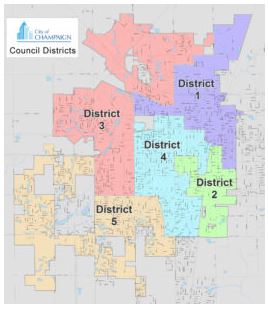
Full article here. It has contact information for City of Champaign Council members. More information, including maps to look up your district and representative here. County Clerk tool to look up your districts and representatives here. Or click on the map below to find your district directly: 

https://cityofchampaign.maps.arcgis.com/apps/InformationLookup/index.html?appid=f4fa287d152c4d2cbc0aae5cac8dbd31

What might not be so obvious is that the exemption applies only to renters who tend to be lower income than home owners and landlords themselves. In other words if you can afford to own the property then you're protected. In fact you could legally discriminate against renters convicted of the same crimes as yourself.

Proponents point out that ending this exemption brings Champaign and Urbana laws closer in sync and would still allow vetting of lessees by landlords. It simply wouldn't allow for blanket bans that only take into account convictions of specifically just those people who can't afford to buy property.


More information:

More on the Racial Justice Task Force here.

More on the recent Champaign County Board vote to urge the City of Champaign to change the ordinance here: Committee of the Whole and RJTF Recommendations

CU Indivisible's statement on the RJTF recommendations: CU Indivisible and RJTF Recommendations 


Related: Housing Authority of Champaign County rules

The RJTF Housing recommendations also included changing a similar issue at the HACC.
Housing Recommendations
  1. The Housing Authority of Champaign County should change its eligibility policies to provide fair housing rights to all applicants with criminal conviction records except when U.S. Department of Housing and Urban Development rules require a public housing authority to reject an applicant due to criminal record.
  2. The Champaign County Board should urge the Housing Authority of Champaign County to change its policies as described above.
  3. The Champaign City Council should repeal Section 17.4-5 of the city code.
  4. The Champaign County Board and local law enforcement officials should urge Champaign City Council members to repeal Section 17.4-5 of the city code to help reduce recidivism and racial disparities in the criminal-justice system.
Quick Overview of the Housing Authority of Champaign County here: New Housing Authority Director

Monday, March 5, 2018

Attend a Meeting - Champaign HRC

To jump directly to the Champaign Human Relations Commission meeting notes click here.

In Champaign the City Council, and in this case the Human Relations Commission, meet at the City Building in the City Council Chambers (from google maps and city videos screen grab):


https://goo.gl/maps/Ysk4TqsKhSD2


It's generally street parking at 75 cents an hour, so bring quarters or face the annoying meter website on your phone.

The City Council Chambers entrance is to the left as soon as you enter the Chester St. Entrance. Along the outside wall is a display with informational pamphlets including the protocols for public participation: "How to Address the Council." The door warns of the usual rules about no food or drink and to turn off your cell phones.

Once inside, the back table will typically have an agenda and any other materials for the audience. The projector screen for Power Point presentations is on the right side wall.

Today's meeting is a Human Relations Commission meeting: "The Human Relations Commission is responsible for the promotion of equal rights and opportunities in the City.  It is responsible for the enforcement of the City’s Human Rights Ordinance and serves as the hearing board for complaints of violation of the Ordinance that cannot be conciliated by staff.  The Commission also advises the City Council on human rights and equal opportunity issues."


Champaign Human Relations Commission Meeting: March 5th, 2018 at 5:30pm (video link)

The Meeting started promptly at 5:30pm. In attendance: Chair Young, Vice Chair Elmore, and Commissioners Bressner, Felty, and Greene, and two staff members. Absent were Commissioners C. Comer, W. Comer, Midden, and Secretary Turner.

Previous minutes were accepted and there was a report of one open discrimination case involving employment and no open cases involving policing.

There was an announcement that the Community Relations Office had buttons and other materials for March being women's history month available to the public. There was an additional announcement for the disABILITY Resource Expo on April 7th, 2018.

No Audience Participation.


Guest Speaker: Holly Wilper, President of the Champaign County League of Women Voters (LWVCC)

She covered some of the basic history of the League nationally and locally. She then discussed some of their projects such as mock elections for students with the assistance of the County Clerk and voting machines. Also candidate forums for candidates to address the issues and not each other. They already had forums for the primary (video available on their website and from the county Cheat Sheet) and will probably have forums for the general election in September or October.

She also talked about the Observer Corps project where members observe local government bodies and report back to the rest of the group about them, including how open and accessible they are. There was a court observer project that sounds like it is going through some leadership changes. They're updating a news literacy project from years ago and adapting it for the current "fake news" phenomenon to help people sort through the nonsense with a skeptical eye.

She described topical study groups on various political issues such as gun policies and immigration. She described pillars of their work being Human Resources (such as encouraging Human Relations Commissions), Natural Resources (environment and more), Local Government, and the Judicial System. The last two she described their efforts to make sure they're accessible, working for everyone, and working efficiently.

She made a point to note that the local League is for all of Champaign County, not just the City of Champaign.  If groups want to work with the league they can bring their non-partisan efforts to their attention, help with study topics and share information. Individuals can volunteer. They encourage engagement with local government, respectful discourse, and above all: voting.

Q & A:

Q. Felty: asked if their was as comporable organization for men.
A. The LWV has male members too.

Q2. Asked if they were aware of the 5th and Hill environmental issues.
A. They're aware, but Barb Specter (?) is the person to talk to.

Q3/A: They talked about communicating further about a potential redlining issue with home loan access shunting people to Decatur or Rantoul by limiting access to loans in Champaign.

Q. Greene: noted her participation in the mock elections and a now newly registered voter. Asked about bringing registration to high schools.
A. Due to the strict registration age limits in Illinois it's messy. Apparently some states allow younger future voters to at least register for the future.

Q. Elmore: How is the Champaign HRC doing, given that they observe and try to improve such commissions.
A. She noted that it was good that it was active. Some HRCs exist to just check off a box so cities can say they have one and look like they're doing something. Some HRCs bicker as opposed to Champaign's which appears to believe in the mission.

Q2. Are their LWV City Council observers?
A. Yes, for both Champaign and Urbana. There are roughly 12-14 government bodies and they have observers in nearly all, but not all.

Q. Chair Young: Membership information and how to join?
A. She explained the dues. They have 89 dues paying members who not only participate but also have voting rights. They're trying to improve their diversity. A discussion ensued about recruitment and outreach opportunities to help with diversity.

Q. Felty again: brought up their recommendation (also a Racial Justice Task Force recommendation — Felty was on the task force) to end the housing discrimination exemption for convicted felons for 5 years in Champaign.
A. It could be part of the League's criminal justice portfolio. Asked for a write up with a description for their members. Could write letters to the editor and other actions. That is "right up our wheel house."

Guest Speaker thanked for her time.


Back to Agenda:

Committee Reports: there was going to be an update on a video by Comer (which?) but absent. There was nothing in old or new business and no further audience participation.

Comments: Greene noted Centennial High School was having an after school event open to the public on March 14th at 3:45pm at the school track on gun violence. There are going to be guest speakers on the issue.

Felty gave an update on the Mennonite screening of the "Racial Taboo" film that 150 local residents attended and split into 14 discussion groups afterward to consider. Next Sunday at 4:30pm there will be followup discussions also at the Mennonite church.

Adjourned at 6:04pm